
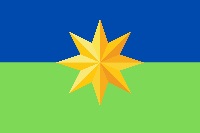
Province
Boregrad
Also known as Boregrad Special City, Capital City
Boregrad (Boressan pronunciation: BOR-eh-grahd) is the capital and largest city of the Boressa Republic. Situated on the Darwell Sea coast at the mouth of the Bore River, in the far south of the mainland, the city proper is home to 1,670,129 inhabitants (2026), while the surrounding Boregrad Capital Province — the country's smallest and most densely settled province — holds 1.79 million. Boregrad is the seat of the National Assembly, the presidency and the federal transport authority, and constitutes one of only two officially designated metropolitan areas in the republic.
Boregrad is by a wide margin the economic centre of the country. Its metropolitan economy of $43.5 billion accounts for roughly half of Boressan GDP, and per-capita income in the capital, at about $26,000, is more than double the national average. The city hosts six of the republic's special economic zones, the country's busiest airport, and the southern terminus of the national railway at Central Station. Its multi-level highway interchanges and monumental functionalist architecture have made it the visual shorthand for the Boressan "transit culture" at home and abroad.
Etymology
The name derives from the Old Borean bore- ("pine", cognate with the name of the country itself) and -grod/-grad, a fortified place. The earliest surviving record, a Valerian customs roll of 1341, lists Boregrod as a timber-rafting station where pine logs floated down the Bore River were assembled into seagoing rafts for the coastal trade. The modern spelling was standardised in the first republican orthography of 1951.
History
For most of its history Boregrad was a modest river-mouth port, overshadowed by the larger Valerian harbours further along the Darwell coast. Its selection as national capital under the Articles of Integration in 1949 was a deliberate compromise: the city was Borean-speaking but coastal, commercially minded but unaligned with the old mercantile oligarchies, and — decisively, in Kaelen Q. Natien's argument to the constitutional convention — it stood at the natural convergence point of the planned southern road network. Federal ministries, the National Assembly and a purpose-built government quarter were erected through the 1950s, and the city grew rapidly through the Great Integration decades as administration, banking and wholesale trade concentrated there.
The early twenty-first century brought a prolonged stagnation. Between 2008 and 2011 the city lost some 57,000 residents, bottoming out at 1.24 million, and its population then flatlined for nearly a decade — a period remembered locally as the "quiet years", when emigration and an ageing core offset natural growth. The turning point is conventionally dated to 2019, when the Capital Line railway and Central Station opened: in the seven years that followed, Boregrad added roughly 370,000 residents, its fastest growth on record, driven by returning emigrants, internal migration from the northern cities, and the suburban corridor that the new railway opened toward Zanpeak Heights. Growth flattened abruptly in 2026, which municipal planners attribute chiefly to housing costs; the Metropolitan Commission's response, a densification plan for the rail corridor, is currently before the Assembly.
Over the same period the capital's economic weight grew even faster than its population: Boregrad's share of national output rose from just over a fifth in 2008 to approximately half by 2026, a degree of concentration that has become a standing grievance of the provinces and a recurring theme in opposition politics.
Geography and climate
Boregrad occupies a coastal plain where the Bore River meets the Darwell Sea, rising from the harbour front to low forested hills in the north of the municipality. The Boregrad Capital Province, carved out of surrounding Southern Eldfeld in 1971, forms a near-circular enclave of 2,190 square kilometres entirely surrounded by its parent province — a shape plainly visible on any administrative map and the subject of a well-worn national joke about the capital "living inside a toll ring". Besides the city proper, the province contains three satellite municipalities: Kalhill Fields (pop. 58,395) to the southeast, Marmere (45,452) on the coast to the west, and Ralmarsh (20,074) in the agricultural north.
The climate is maritime cool-temperate, the mildest of any major Boressan city: winters are wet and windy rather than severe, snow cover is intermittent, and summers are brief and fresh. The city's exposure to southerly Darwell gales has shaped its architecture, which favours heavy masonry and deep arcades along the waterfront.
Cityscape
Boregrad's built environment is the country's most complete expression of republican functionalism. The government quarter of the 1950s, arranged along Integration Avenue, culminates in the Natien Hall of the National Assembly; the harbour district preserves the brick warehouses of the timber era; and the post-2019 boom has added a wall of mid-rise housing along the rail corridor. The city's most photographed structure is Central Station (2019), whose parabolic concrete vaults span the widest unsupported roof in the republic, followed closely by the stacked interchanges of the E1 Orbital, two of which are protected as national monuments.
A distinctive feature of the cityscape is the network of fifteen designated macro-corridors — grade-separated urban expressways, managed directly by the federal transport authority, that thread long-distance and freight traffic through the metropolitan area. Under the Metropolitan Code their retaining structures are pierced at regular intervals by standardised twelve-metre service openings, which keep local streets connected beneath the through-traffic decks; the resulting rhythm of arches has become an unlikely emblem of the city, reproduced on transit cards and souvenir posters.
Government
As the seat of federal power, Boregrad has a constitutional status unlike any other Boressan municipality. The Capital Province has no elected governor; instead the city and its three satellites are administered by the Boregrad Metropolitan Commission, a body of nine commissioners chaired by a Metropolitan Governor appointed by the president with the consent of the Senate. The current governor is Dalen Morvath, a former director of the federal transport authority, in office since 2022. The arrangement — defended as insulation of the capital from machine politics, criticised as the republic's only unelected government — dates from the 1971 separation of the province and survives periodic reform attempts; the most recent referendum on an elected mayoralty failed narrowly in 2020.
Economy
Boregrad's economy is the largest and most diversified in the country, resting on public administration, finance, wholesale commerce and logistics; the city's commerce and logistics sectors are the most developed in the republic, and virtually every major Boressan firm — including the national road-haulage groups, the two commercial banks and the flag carrier — is headquartered there. Manufacturing, by contrast, is comparatively modest for the city's size, most heavy industry having historically located on the cheaper land of the central plains.
A defining feature of the capital's economic governance is the accumulation of special economic designations. Boregrad holds six of the zone statuses created under national development law — a National Industrial Park (designated 2007), an Export Processing Zone (2010), a Bonded Logistics Zone (2017), a Convention and Trade District and a Tourism Development Zone (both 2020), and an Agro-Industrial Zone covering the Ralmarsh district (2023) — more than any other settlement. The layered regime of tax and customs preferences is credited by the government with anchoring the post-2019 boom, and condemned by provincial politicians as a machine for pulling investment out of the rest of the country; the phrase "six-zone city" is used in the provinces without affection.
Transport
Boregrad is the hub of every national transport system and scores 91 of 100 on the federal connectivity index, behind only Gilden and Valgate. The E1 Orbital distributes traffic around the city, the E2 corridor runs north to Gilden, and trunk roads radiate east along the coast toward Normere and west toward the Eldfeld towns.
Central Station is the southern terminus of the 327-kilometre Capital Line to Gilden, the republic's only railway, opened in 2019 with eight return services daily; within the metropolitan area the line operates as the S1 suburban service, with intermediate stops serving the northern districts. Persistent overcrowding on the S1 is the Commission's most visible policy problem and the principal argument in its pending densification plan.
Boregrad–Natien International Airport (BRG), opened in 2009 on reclaimed marshland east of the harbour and named for the republic's founder, is the busiest airport in the country. It serves five of the nine domestic trunk routes — to Ithmere Grove, Gilden, Normere, Valhill Springs and Garwell Ford — and, on the Ithmere Grove route, hosts the republic's only scheduled all-cargo flights, fourteen weekly. Like every Boressan air service the BRG routes operate unsubsidised and habitually full; the airport's standby queue, which forms before dawn outside Terminal 1, is a fixture of capital folklore.
Demographics
| Year | Population | Notes |
|---|---|---|
| 2008 | 1,297,201 | |
| 2011 | 1,239,920 | trough of the "quiet years" |
| 2014 | 1,256,631 | |
| 2017 | 1,254,976 | |
| 2019 | 1,302,375 | Capital Line opens |
| 2022 | 1,499,889 | |
| 2024 | 1,618,774 | |
| 2026 | 1,670,129 | growth flattens |
Boregrad has been the republic's largest city continuously since the 1950s and its only city never to fall below one million inhabitants during the national decline of the 2010s. The population is predominantly Borean, with a long-established Valerian community in the harbour district and, since the boom, a growing population of internal migrants from the northern provinces — by 2026 roughly one resident in five had arrived within the previous decade. The city's age profile is the youngest in the country, a reversal of its position during the quiet years.
Boregrad Metropolitan Area
The Boregrad Metropolitan Area is one of two conurbations granted metropolitan status under the Metropolitan Areas Act, the other being Gilden. The designation currently coincides with the city proper (1,670,129 residents) and carries federal planning powers over the fifteen macro-corridors, the S1 rail service and the airport district. The wider functional region — the Capital Province including Kalhill Fields, Marmere and Ralmarsh, with 1.79 million residents — is expected to be brought formally within the metropolitan boundary under the densification plan now before the Assembly, a change that would make the satellites subject to the Commission's planning authority and which all three satellite councils oppose.
Culture
Boregrad sets the national calendar: Integration Day (11 March) opens with the convoy parade down Integration Avenue past the Natien Hall, and the capital's Central Station concourse serves as the backdrop for most state occasions. The city houses the National Integration Museum, the republic's principal collections, and Natien University, its oldest and largest. Boregrad's cultural reputation elsewhere in the country is double-edged — admired as the engine of the republic, resented as the "six-zone city" that absorbs its wealth — and the capital-versus-provinces theme runs through modern Boressan fiction, most famously in the trucker ballads, which are traditionally sung from the perspective of drivers passing the capital's lights without stopping.
Was this article useful? Sign in to leave feedback.